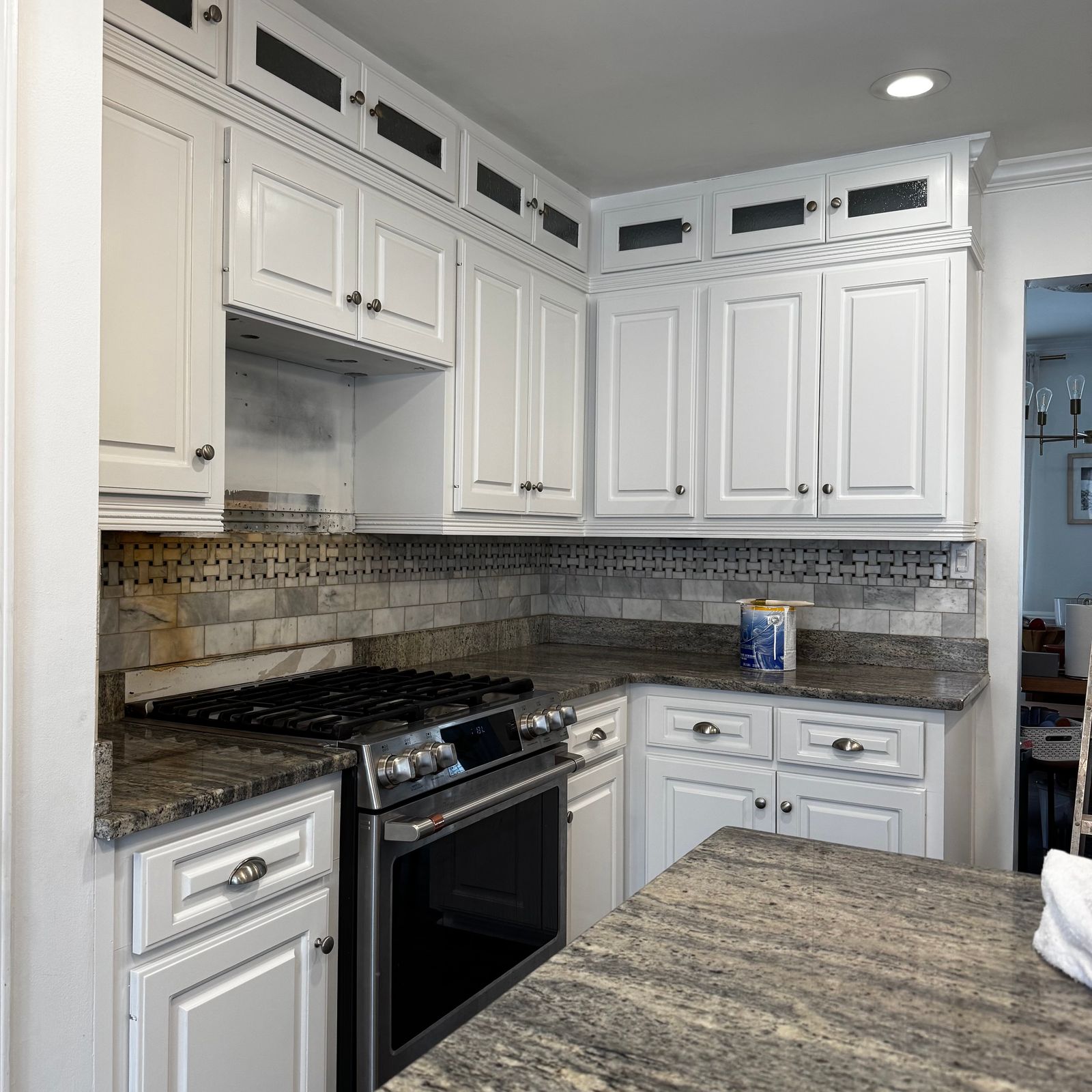
What cabinet painting covers
We paint kitchen cabinets, bathroom vanities, laundry room cabinets and built-in cabinetry. That means the doors, drawer fronts, face frames, exposed end panels and island panels. Glass-front doors, cabinet crown and light rail can be painted too, and the inside of the boxes if you want them done.
We use one coating on every cabinet job: Sherwin-Williams Gallery Series Waterborne Topcoat, sprayed. It’s a cabinet coating rated to the cabinet industry’s KCMA standard, and it’s spray-only. We don’t offer a cheaper cabinet option, because cabinets take more abuse than any other painted surface in the house.
Who it’s for
Cabinet painting fits people who like their kitchen layout and have solid cabinet boxes, but are tired of the color. Dated honey oak, cherry stain that makes the room dark, or builder-grade white that has yellowed. It’s also a common job for people getting a house ready to sell, since the kitchen is where buyers look hardest.
How we do it
- Count and check. We count every door, drawer front and panel, look at the current finish (painted, stained or factory), check for loose hinges or damage, and give you a price.
- Protect the kitchen. Counters, backsplash, appliances and floors get covered and masked off.
- Remove and label. Doors and drawer fronts come off. Every piece and its hinges get labeled so each one goes back exactly where it came from.
- Degrease. Kitchen cabinets carry years of cooking grease and hand oil, especially around handles. Paint will not stick to grease, so every surface gets cleaned with a degreaser first.
- Scuff and fill. Everything is scuff sanded so the primer has something to grab. Dings and gouges get filled. Oak gets grain filled here if you’ve asked for a smooth finish.
- Prime. A bonding primer goes on every surface. On stained cabinets this step is what keeps the paint from peeling later.
- Spray the finish. Doors, drawer fronts, face frames and panels get sprayed with Gallery Series Waterborne Topcoat.
- Let it cure. The finish needs time to dry and harden before anything gets handled or rehung. Rushing this step is how doors end up stuck together or marked up.
- Rehang and adjust. Doors and drawer fronts go back in their labeled spots, hinges get adjusted so the gaps are even, and we walk the kitchen with you.
Why we spray cabinets
Cabinet doors are seen up close every day, in kitchen light that shows everything. A brush leaves brush marks and a roller leaves texture, and on a flat door panel both are easy to see. A sprayer lays the coating down as an even film across the whole piece, edges and all. The result looks like a factory finish, not a weekend project.
The coating matters as much as how it goes on. Gallery Series is made for cabinets, not walls or trim, and it’s built to stand up to the opening, closing and wiping cabinets get.
Paint, reface or replace?
You have three ways to get a new-looking kitchen:
- Paint keeps your boxes and doors and changes the color. It’s usually the least expensive of the three, and it’s the right call when the cabinets are solid and the layout works.
- Reface puts new doors and drawer fronts on your existing boxes, with a veneer over the frames. It makes sense if you want a different door style.
- Replace means new cabinets. It’s the answer when the layout doesn’t work, the boxes are water damaged or falling apart, or you’re remodeling anyway.
Our guide on cabinet painting vs refacing vs replacing covers the full comparison.
Which paint level fits
Our three paint levels (SuperPaint, Duration Home and Emerald) are for walls, ceilings and trim. Cabinets don’t get a choice of level. Every cabinet job gets the same Gallery Series spec, because there’s one right way to do it.
If you’re repainting the kitchen walls at the same time, most people pick Performance (Duration Home) for a kitchen because it handles scrubbing. See interior painting for how the levels compare, and a free color consult comes with every estimate if you’re stuck between colors.
What affects the price
Cabinets are priced by the piece. We count the doors, drawer fronts, exposed end or island panels and glass-front doors. Stained cabinets, oak grain filling, the inside of the boxes and cabinet crown add to that. The estimate is free, and you get a written price before we start.
Our cabinet painting cost page walks through all of it, and you can read how we price every service. We paint cabinets across the Upstate, including Simpsonville, Greer and Boiling Springs. Financing is available through Wisetack or Klarna.