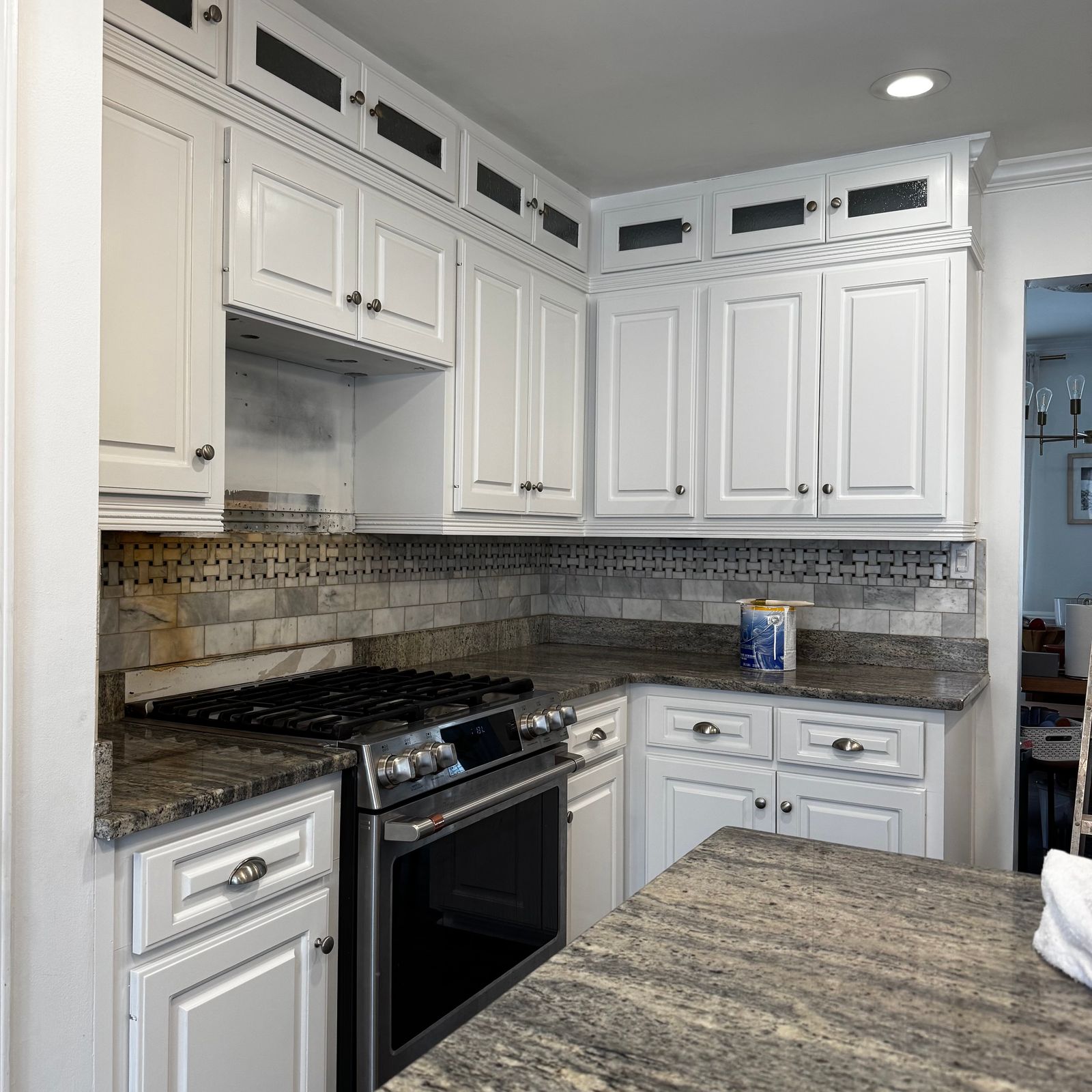
How cabinet painting is priced
We price cabinets by face count. That means we count every piece that gets painted on the front of your cabinets, and each kind of piece has its own set price:
- Doors
- Drawer fronts
- Exposed end panels and island panels
- Glass-front doors
The face frames around the doors and drawers get painted as part of the job. There’s no separate line for them. Counting pieces is fair both ways: a kitchen with a lot of doors costs more than one with a few, and you’re not paying for a “kitchen size” guess.
How we count and quote
The estimate is free, and a free color consult comes with it. We count every door, drawer front, end panel and glass-front door in your kitchen. We look at the finish your cabinets have now (painted, stained or factory), check for loose hinges or damage, and ask what you want done beyond the fronts, like the inside of the boxes or oak grain filling.
Then you get a written price before we start. It’s based on your count and your cabinets, not on an average kitchen.
Stained, factory or raw wood
The finish on your cabinets now changes how much prep they need.
- Stained cabinets cost more. Paint doesn’t grip a stained and clear-coated surface well, so they need an adhesion primer and more careful prep.
- Factory finish (the smooth painted or coated finish many newer cabinets come with) doesn’t add to the price. Our normal scuff sanding and bonding primer handle it.
- Raw wood that has never been finished costs less, since there’s no old finish to work through.
Oak grain
Oak has an open grain, and paint doesn’t hide it. If you paint oak cabinets without filling the grain, you’ll see the grain texture through the new color. Some people like that. If you want a smooth, modern finish with no grain showing, we grain fill each piece, and that adds to the price. We’ll show you the difference at the estimate so you can decide.
Other things that affect the price
- Inside of the cabinet boxes. Most people skip this, but it’s worth doing behind glass-front doors.
- Cabinet crown or light rail.
- Condition. Years of grease, dings and gouges to fill, and loose hinges all mean more prep.
- Your timeline. If you need the kitchen back by a certain date, tell us at the estimate so we can plan the job around it.
Small jobs
Every cabinet job has setup that doesn’t shrink with the size: covering and masking the room, removing and labeling the doors, priming and spraying. That setup is part of the price on every job, so small jobs like a single bathroom vanity or a laundry room cost more for their size than a full kitchen.
Painting vs replacing
Painting keeps your cabinet boxes, doors, countertops and backsplash where they are. You pay for prep and finish, not new cabinets, demolition and installation, so painting usually costs much less than replacing. Replacing still makes sense when the layout doesn’t work for you, the boxes are water damaged or falling apart, or you’re redoing the whole kitchen. Refacing sits in between. Our guide on painting vs refacing vs replacing lays out when each one is the right call.
One paint spec, no levels
Walls and trim come in three paint levels. Cabinets don’t. Every job gets Sherwin-Williams Gallery Series Waterborne Topcoat, sprayed, so there’s no paint level to pick and your price covers that one spec. You can read how we do it on our cabinet painting page, and read how we price the rest of our work. We paint cabinets all over the Upstate, from Spartanburg and Duncan to Mauldin. Financing is available through Wisetack or Klarna.